
When the city of Pittsburgh is mentioned, the association of this town with the steel industry is immediate and powerful, but how did Pittsburgh become the steel capital of the world?
I wanted to understand the reasons why Pittsburgh became so prominent, and I found that, as in most cases, the rise of Pittsburgh was not preordained but the result of the strenuous efforts of many people over the 1800s.
Pittsburgh became a prominent steel town through the close availability of the resources needed for smelting, such as coal and raw iron ore, but it’s dominance in world steel was the result of the relentless effort to make the Monongahela river navigable and by the revolutionary strides in steelmaking made by Andrew Carnegie in his Pittsburgh area mills.
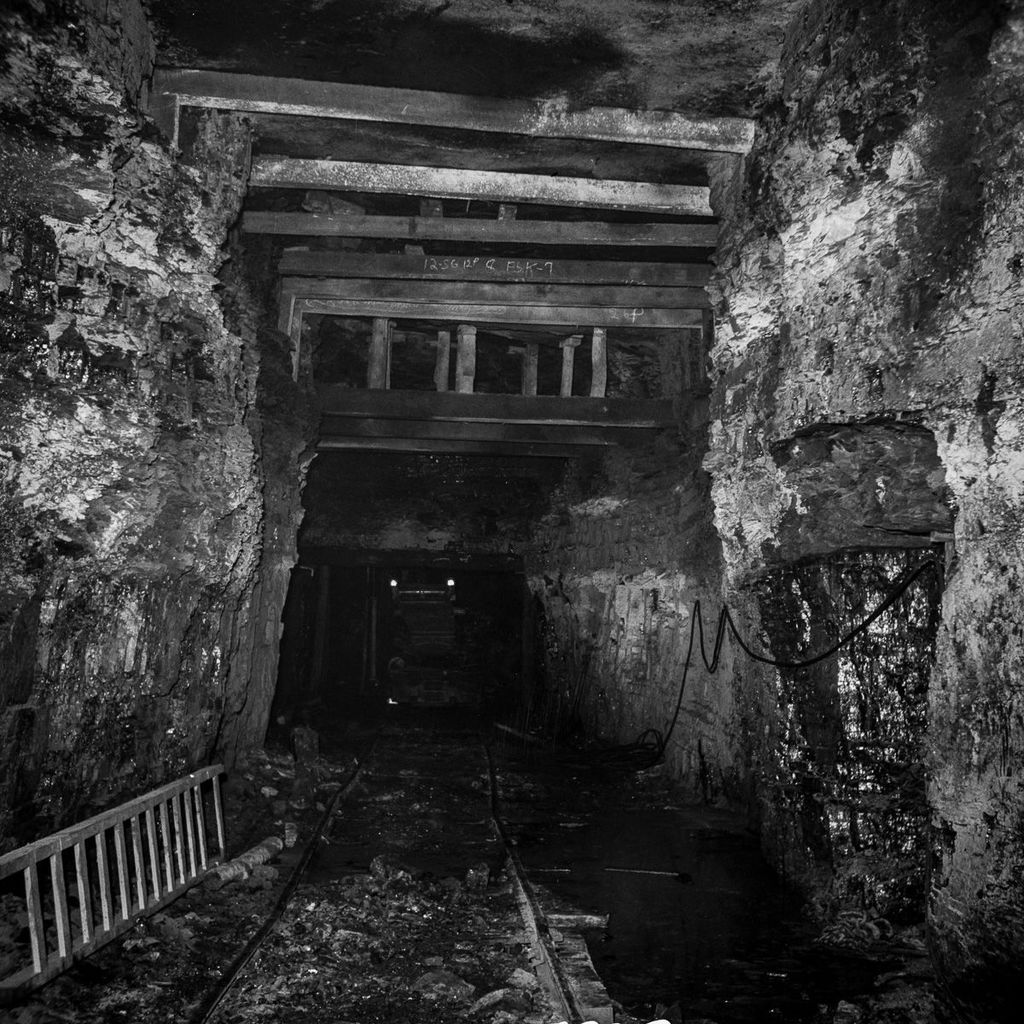
Coal had long been a noted and valuable resource of the Pittsburgh area, as early as 1797, the travelling surveyor, Gilbert Imlay noted that coal was the principle source of fuel being used for heating by Pittsburgh residents, with the large Coal Hill on the other bank of the Monongahela providing ample supply.1
Coal in itself is not useful for steel production, but through a process of heating to remove impurities, it can be converted into coke, which was an ideal fuel for steelmaking.2
The iron ore needed for steel production was found in enough quantity to satisfy early small-scale production in the Pittsburgh area, but the massive deposits needed for industrial production were found in the Upper Peninsula of Michigan in the 1840’s, and the proximity of Pittsburgh to Lake Erie allowed for the convenient influx of ore.3
The resources for steel production were in place, but the Monongahela river was not naturally suitable to shipping year round, many parts were too shallow during the winter, and this could have halted Pittsburgh’s growth, but during the 1840s, after a refusal by both the federal and Pennsylvania state governments to fund navigational improvements, the Monongahela Navigation Company formed to privately fund the construction of the locks needed for the river to become navigable year round, and despite difficulties in funding, the work was seen through and as the internal reports of the Company make clear, the completion of the locks allowed for year round connection as far east as Baltimore on the East coast and as far west as New Orleans.4
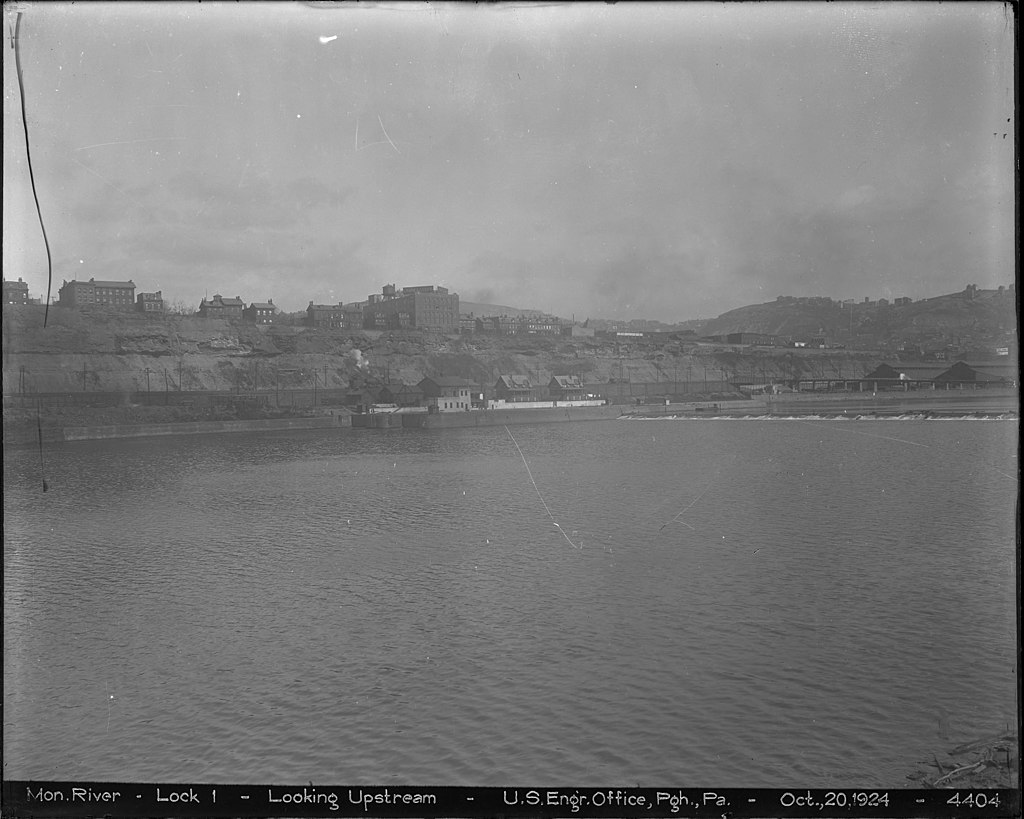
With the ability to easily ship raw materials in and finished steel out of Pittsburgh, the location became one of the best for steel-making west of the Appalachians, but it was not yet the record-holder for the highest steel production, until Andrew Carnegie built his groundbreaking steel plants at Homestead and Duquesne.
The Homestead mill was the first mill in the U.S to successfully produce high-quality open hearth steel on a large scale, which not only made Carnegie’s Pittsburgh operation one of the only two places where the U.S Navy bought the armor plating used on it’s warships5 but also allowed for the reforging of scrap steel into useable form, massively cutting costs and allowing greater output.6
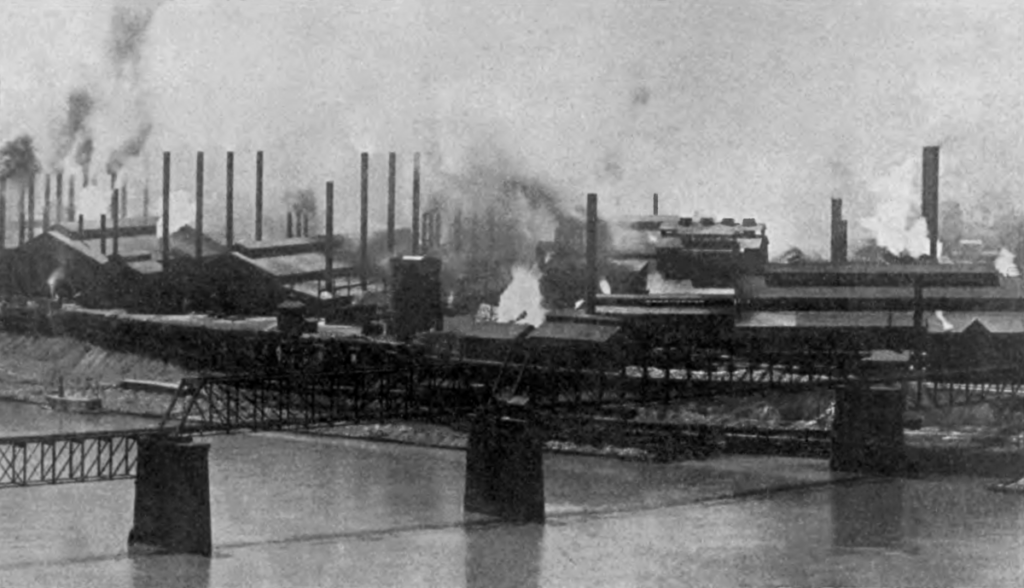
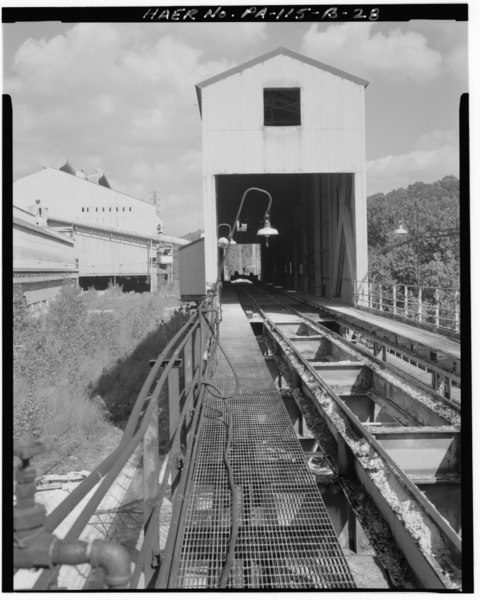
Further development on the Homestead mill introduced electric cranes and automatic ore charging machines that increased efficiency and incidentally reduced the exposure of workers to dangerous situations.(( Kobus, 2015 “Carnegie’s Homestead Works )) These improvements were brought together with other advanced technology in the construction of the Duquesne steel works that Carnegie built in 1895, this plant shattered all previous production figures for steel plants by totally automating all heavy lifting and manual labor in loading and transporting ore and materials through electric hoists and a small locomotive engine,(( McNutley and Baker, 1897, pg.265 )) putting Carnegie, and by extension Pittsburgh at the zenith of world steel production, with the Carnegie plants alone producing 9% of the worlds steel in 1898.7
My research has shown that the dominance of Pittsburgh steel was achieved through the serendipity of geographical location, the efforts of private companies building riverine infrastructure and the technological innovation of Andrew Carnegie’s steel business.
Bibliography
Hartshorne, Richard. “Location Factors in the Iron and Steel Industry.” Economic Geography 4, no. 3 (1928): 241–252. Accessed September 1, 2024. https://www.jstor.org/stable/140295.
Kobus, Kenneth J. City of Steel: How Pittsburgh Became the World’s Steelmaking Capital during the Carnegie Era. Rowman & Littlefield, 2015.
Imlay, Gilbert, Elihu Barker, Daniel Boone, Patrick Journal up the Illinois River Kennedy, John Filson, Jonathan Heart, Thomas Hutchins, Benjamin Franklin, Thomas Hutchins, and North American Land Company. Plan of association. A Topographical Description of the Western Territory of North America : Containing a Succinct Account of Its Soil, Climate, Natural History, Population, Agriculture, Manners, and Customs : With an Ample Description of the Several Divisions into Which That Country Is Partitioned … London : Printed for J. Debrett, 1797. Accessed September 4, 2024. http://archive.org/details/topographicaldes00imla.
Johnston, et al. “Annual Report of the President and Managers to the Monongahela Navigation Company : With the Accompanying Documents 1845.” HathiTrust. Last modified January 1845. Accessed September 3, 2024. https://hdl.handle.net/2027/ien.35556038796181?urlappend=%3Bseq=1.
McNutley, Stauffer, and Charles Baker. “Engineering News v.37 No.17 1897.” HathiTrust. Last modified June 1897. Accessed September 4, 2024. https://hdl.handle.net/2027/coo.31924062330075?urlappend=%3Bseq=7.
U.S Congress. “Prices of Armor for Naval Vessels. Investigation by the Committee on Naval Affairs of the United States Senate in Relation to Prices Paid for Armor for Vessels …” HathiTrust. Last modified 1896. Accessed September 5, 2024. https://hdl.handle.net/2027/mdp.39015062803187?urlappend=%3Bseq=5.
creator, Stupich, Martin. LOOKING NORTH AT FLUX HANDLING BUILDING AND TRESTLE, WITH BOP SHOP IN BACKGROUND. – U.S. Steel Duquesne Works, Basic Oxygen Steelmaking Plant, Along Monongahela River, Duquesne, Allegheny County, PA. 4 x 5 in., 1989date QS:P571,+- -00T00:00:00Z/9 1989. https://www.loc.gov/pictures/item/pa3340.photos.359297p. Accessed September 8, 2024.
District, United States Army Corps of Engineers Pittsburgh. Monongahela River Lock and Dam 1 Upstream View, 1924date QS:P571,+- -00T00:00:00Z/9 1924. http://historicpittsburgh.org/islandora/object/pitt:20180220-hpichswp-0268/. Accessed September 8, 2024. https://commons.wikimedia.org/wiki/File:Monongahela_River_Lock_and_Dam_1_Upstream_View(20180220-hpichswp-0268).jpg.
Jasonanaggie, original: not stated; extracted by. English: Partial View of the Homestead Steel Works, circa 1901date QS:P,+- -00T00:00:00Z/9,P1480,Q5727902 1901. English: Derivative of How They Succeeded.djvu/277. Accessed September 8, 2024. https://commons.wikimedia.org/wiki/File:Partial_view_of_the_Homestead_Steel_Works.png.
Q6226694, Viaf: 108917054, Isni: 0000000081739325, Ulan: 500011875, LCCN: n85373812, Gnd: 124604889, and WorldCat.
“File:A Section of the Mine with an Unusually High Roof Due to Poor Ceiling Quality.Jpg – Wikimedia Commons.” Last modified May 2017. Accessed September 8, 2024. https://commons.wikimedia.org/wiki/File:A_section_of_the_mine_with_an_unusually_high_roof_due_to_poor_ceiling_quality.jpg.
